
Understanding what causes headaches in different parts of the head requires examining the complex interplay between neurological structures, vascular systems, and muscular tension that produce distinct pain patterns. The location of head pain serves as a diagnostic roadmap, offering clinicians and patients alike valuable clues about underlying mechanisms and potential triggers. While headaches rank among the most common neurological complaints worldwide””affecting an estimated 50 percent of the global population annually””the specific region where pain manifests often determines both the cause and the most effective treatment approach. The brain itself cannot feel pain, lacking the nociceptors necessary for pain perception.
Instead, headaches arise from pain-sensitive structures surrounding the brain: blood vessels, meninges (the protective membranes), muscles, nerves, and the periosteum of the skull. When these structures become irritated, inflamed, or compressed, they generate pain signals that the brain interprets according to their anatomical location. This explains why a headache centered at the temples feels distinctly different from one radiating from the back of the skull or concentrated behind the eyes. By the end of this article, readers will gain a thorough understanding of the neuroanatomical basis for regional head pain, the primary and secondary headache disorders associated with specific locations, and evidence-based strategies for both identifying and managing different headache types. This knowledge empowers individuals to communicate more effectively with healthcare providers, recognize warning signs that warrant medical attention, and make informed decisions about prevention and treatment.
Table of Contents
- Why Do Headaches Occur in Specific Areas of the Head?
- Frontal and Forehead Headache Causes
- Temple and Lateral Head Pain Origins
- What Causes Headaches at the Back of the Head and Neck
- One-Sided Headaches and Their Neurological Significance
- Behind the Eyes””Orbital and Periorbital Headache Mechanisms
- How to Prepare
- How to Apply This
- Expert Tips
- Conclusion
- Frequently Asked Questions
Why Do Headaches Occur in Specific Areas of the Head?
The localization of headache pain follows predictable patterns based on which pain-sensitive structures are activated and the neural pathways that transmit those signals. The trigeminal nerve, the fifth cranial nerve, serves as the primary conduit for head and face pain, with its three branches (ophthalmic, maxillary, and mandibular) innervating distinct facial and cranial regions. When headaches occur in the forehead, around the eyes, or in the upper face, the ophthalmic division is typically involved.
Pain in the cheeks and upper jaw involves the maxillary branch, while lower face and jaw pain implicates the mandibular division. Beyond the trigeminal system, the upper cervical nerves (C1-C3) contribute significantly to headache patterns, particularly those affecting the back of the head and upper neck. These cervical nerves converge with trigeminal fibers in the trigeminocervical complex, a region in the upper spinal cord that explains why neck problems frequently produce headaches and why head pain often radiates into the neck and shoulders. This anatomical arrangement underlies cervicogenic headaches and helps explain the referred pain patterns seen in tension-type headaches.
- **Vascular involvement** determines whether pain pulses or throbs, as dilated blood vessels press against surrounding nerve fibers, creating the characteristic pounding sensation of migraine and cluster headaches
- **Muscular tension** produces a band-like or squeezing quality, typically bilateral and affecting the temples, forehead, or occipital region where muscles attach to the skull
- **Nerve compression or irritation** generates sharp, shooting, or electric-shock-like sensations that follow specific nerve distributions, as seen in occipital neuralgia or trigeminal neuralgia
Frontal and Forehead Headache Causes
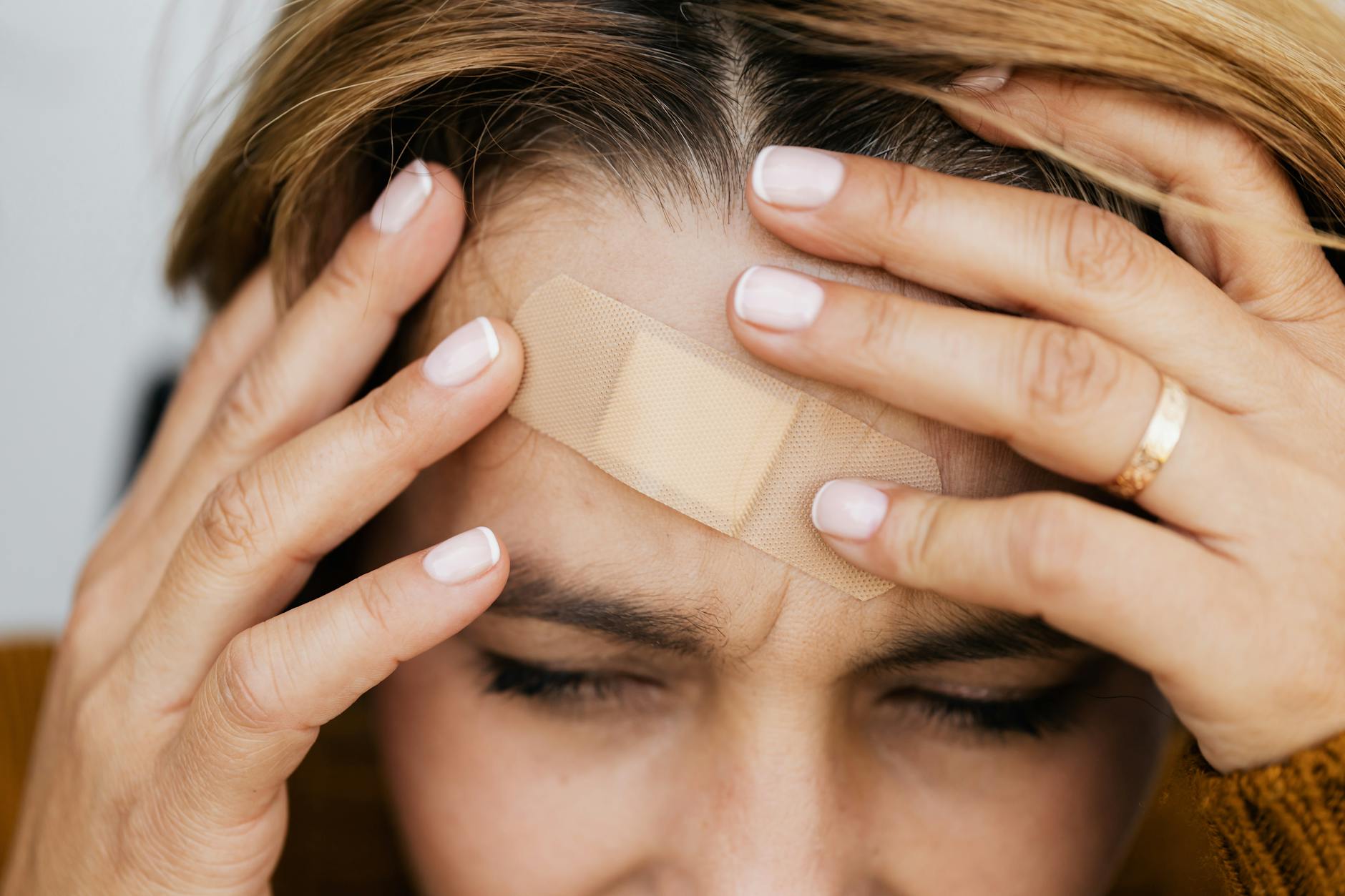
Headaches localized to the frontal region””encompassing the forehead, brow line, and area above the eyes””represent some of the most frequently reported pain patterns. Tension-type headaches, the most prevalent primary headache disorder affecting approximately 40 percent of the global population, commonly manifest in this region as a pressing or tightening sensation. The pain typically extends bilaterally across the forehead and may feel like a tight band wrapped around the head. Sustained contraction of the frontalis and temporalis muscles, often triggered by stress, poor posture, or prolonged screen time, drives this discomfort.
Sinus headaches present another common cause of frontal pain, though research suggests they are frequently overdiagnosed. True sinus-related headaches occur during acute sinusitis when bacterial or viral infection inflames the paranasal sinuses, creating pressure and pain over the affected areas. The frontal sinuses, located directly behind the forehead, produce pain that worsens when bending forward and often accompanies nasal congestion, facial pressure, and fever. Studies indicate that up to 90 percent of self-diagnosed sinus headaches actually represent migraine or tension-type headaches, making accurate diagnosis essential for appropriate treatment.
- **Eye strain headaches** (asthenopia) produce frontal pain after prolonged visual tasks, resulting from overworked ciliary and extraocular muscles; the pain typically resolves with rest and proper vision correction
- **Hormonal fluctuations** during menstruation, pregnancy, or menopause can trigger frontal headaches due to estrogen’s influence on serotonin and other neurotransmitters involved in pain modulation
- **Caffeine withdrawal** characteristically produces bilateral frontal pain beginning 12-24 hours after last consumption, peaking at 20-51 hours, reflecting adenosine receptor upregulation in regular caffeine users
Temple and Lateral Head Pain Origins
Pain concentrated at the temples involves the temporal region of the skull, where the temporalis muscle attaches and the superficial temporal artery courses beneath the skin. This location proves particularly susceptible to both primary headache disorders and more concerning secondary causes that require prompt medical evaluation. Migraine headaches frequently localize to one or both temples, often accompanied by pulsating quality, sensitivity to light and sound, nausea, and visual disturbances.
The throbbing sensation reflects vascular involvement, with sensitized blood vessels responding to each heartbeat. Temporal arteritis (giant cell arteritis) represents a critical diagnosis to consider in patients over 50 years old presenting with new-onset temporal pain. This inflammatory condition affects medium and large arteries, particularly the temporal artery, causing localized tenderness, jaw claudication (pain with chewing), scalp tenderness, and systemic symptoms including fever and fatigue. Left untreated, temporal arteritis can progress to permanent vision loss within days to weeks, making urgent evaluation with inflammatory markers (ESR, CRP) and temporal artery biopsy essential when suspected.
- **Temporomandibular joint dysfunction** (TMD) produces temple and lateral head pain due to the close anatomical relationship between the jaw joint and temporal region; clenching, grinding, and malocclusion strain the joint and surrounding muscles
- **Temporal tendinitis** causes localized pain where the temporalis tendon inserts onto the coronoid process of the mandible, often mistaken for dental problems or TMD

What Causes Headaches at the Back of the Head and Neck
Occipital headaches””those affecting the back of the head from the base of the skull upward””involve distinct anatomical structures and pathophysiological mechanisms compared to frontal presentations. The occipital nerves (greater, lesser, and third occipital) emerge from the upper cervical spine and travel upward through the posterior scalp muscles, making them vulnerable to compression, entrapment, and irritation. Occipital neuralgia produces characteristic shooting, electric, or stabbing pain radiating from the base of the skull toward the crown, often triggered by neck movement or pressure on the nerve pathway.
Cervicogenic headaches originate from dysfunction in the cervical spine””particularly the upper three segments””and refer pain to the head via the trigeminocervical complex. Poor posture, degenerative disc disease, whiplash injuries, and arthritis of the facet joints can irritate cervical structures, generating headaches that typically start at the base of the skull and radiate forward. These headaches worsen with certain neck movements or sustained positions and may accompany reduced cervical range of motion and neck tenderness.
- **Tension-type headaches** frequently involve the occipital region where the trapezius, splenius, and semispinalis muscles attach to the skull; trigger points in these muscles refer pain upward into the posterior head
- **Chiari malformation**, a structural condition where cerebellar tissue extends into the spinal canal, produces occipital headaches that worsen with coughing, straining, or bending forward
- **Raised intracranial pressure** from various causes may present with posterior headaches that are worse in the morning and when lying flat, often accompanied by visual changes and nausea
One-Sided Headaches and Their Neurological Significance
Strictly unilateral headaches””pain confined to one side of the head””carry particular diagnostic significance in headache medicine. While tension-type headaches typically affect both sides and migraines may switch sides between attacks, certain primary headache disorders exclusively or predominantly affect one side, helping clinicians narrow the differential diagnosis. Understanding these patterns aids in selecting appropriate treatment strategies and recognizing when further investigation is warranted.
Cluster headaches exemplify strictly unilateral primary headaches, earning their name from the characteristic pattern of attacks occurring in clusters lasting weeks to months, followed by remission periods. The pain localizes around or behind one eye and radiates to the temple, forehead, and sometimes the jaw. Described as one of the most severe pain conditions known, cluster headaches produce restlessness and agitation rather than the stillness that migraine sufferers prefer. Accompanying autonomic features on the affected side””tearing, nasal congestion, eyelid swelling, and pupil constriction””reflect parasympathetic activation and help distinguish cluster headaches from migraine.
- **Hemicrania continua** causes continuous, moderate pain on one side with periodic exacerbations, responding completely to indomethacin””a response so consistent that it serves as a diagnostic criterion
- **Paroxysmal hemicrania** produces severe, short-lasting attacks (2-30 minutes) occurring multiple times daily on one side, also indomethacin-responsive
- **New daily persistent headache** may be unilateral or bilateral, beginning abruptly and becoming continuous from onset, often following viral illness or stressful life events

Behind the Eyes””Orbital and Periorbital Headache Mechanisms
Pain centered behind the eyes or within the orbital region creates significant concern for patients and warrants careful evaluation given the vital structures housed in this area. The orbit contains the eye, optic nerve, extraocular muscles, and numerous blood vessels and nerves, any of which may generate or refer pain. Migraine headaches commonly produce periorbital pain, particularly during the premonitory and acute phases, as sensitized trigeminal nerve endings surrounding intracranial blood vessels transmit signals interpreted as eye pain.
Primary headache disorders account for most periorbital pain, but secondary causes require consideration. Acute angle-closure glaucoma produces severe eye pain with headache, blurred vision, halos around lights, and nausea””a medical emergency requiring immediate intervention to prevent permanent vision loss. Optic neuritis, inflammation of the optic nerve often associated with multiple sclerosis, causes pain with eye movement and visual disturbances. Cavernous sinus pathology, including thrombosis and tumors, can generate orbital pain alongside cranial nerve deficits affecting eye movement and facial sensation.
How to Prepare
- **Obtain a headache diary** or tracking application designed specifically for headache documentation, ensuring it captures location, intensity, duration, associated symptoms, and potential triggers; consistent daily recording even on headache-free days establishes baseline patterns
- **Map your pain locations precisely** using a head diagram or detailed written descriptions, noting whether pain is unilateral or bilateral, superficial or deep, and whether it radiates or remains fixed; this specificity aids differential diagnosis
- **Document timing patterns** including time of day headaches typically begin, how long they last, and whether they occur in cycles or clusters; hormonal headaches, cluster headaches, and hypnic headaches each have characteristic temporal signatures
- **Record all associated symptoms** such as nausea, light sensitivity, nasal congestion, eye tearing, neck stiffness, or neurological symptoms like visual changes or weakness; these accompanying features often determine headache classification
- **Track potential triggers and relieving factors** including foods, sleep patterns, stress levels, weather changes, medications, and activities; pattern recognition over weeks to months reveals individualized trigger profiles
How to Apply This
- **Use location-based information to guide initial self-care**: bilateral temple pressure with muscle tenderness suggests tension-type mechanisms amenable to stress reduction, posture correction, and over-the-counter analgesics; strictly unilateral pain with autonomic features warrants medical evaluation for trigeminal autonomic cephalalgias
- **Present your headache diary at medical appointments**, highlighting location patterns, frequency trends, and treatment responses; this preparation improves diagnostic accuracy and demonstrates engagement with your care
- **Implement targeted prevention strategies** based on identified patterns: cervicogenic headaches respond to physical therapy and ergonomic modifications, while migraines may benefit from trigger avoidance, regular sleep schedules, and preventive medications
- **Recognize red flag symptoms** requiring urgent evaluation regardless of location””sudden severe headache (thunderclap), neurological deficits, fever with stiff neck, headache after head trauma, or progressive worsening over weeks; these scenarios warrant immediate medical attention
Expert Tips
- **Pay attention to postural components**: headaches that worsen when lying flat suggest raised intracranial pressure, while those improving when supine may indicate low cerebrospinal fluid pressure from leaks; this positional relationship provides critical diagnostic information
- **Distinguish primary from secondary causes** by the presence of systemic symptoms: fever, weight loss, rash, or joint pain accompanying headaches raise concern for underlying medical conditions beyond primary headache disorders
- **Consider medication overuse headache** when daily or near-daily headaches develop in someone frequently using acute headache medications; this paradoxical worsening affects all headache locations and requires supervised medication withdrawal
- **Evaluate sleep quality and disorders**, as sleep apnea produces morning headaches (often occipital or generalized), and poor sleep hygiene disrupts pain-modulating systems regardless of headache type
- **Address cervical spine health** even with frontal or temporal headaches, given the convergence of cervical and trigeminal pain pathways; desk ergonomics, pillow support, and neck exercises benefit multiple headache types
Conclusion
The location of headache pain provides meaningful diagnostic information, reflecting the specific pain-sensitive structures involved and the neural pathways transmitting those signals. Frontal headaches commonly arise from tension, sinus involvement, or eye strain; temporal pain may indicate migraine, TMJ dysfunction, or in older adults, temporal arteritis; occipital headaches often implicate cervical spine structures or occipital nerve irritation; and strictly unilateral pain with autonomic features characterizes cluster headaches and related trigeminal autonomic cephalalgias. Understanding these patterns enables better self-assessment, more productive medical consultations, and targeted treatment approaches.
Moving forward, maintaining a detailed headache diary remains the single most valuable tool for identifying patterns and triggers specific to your situation. When headaches are frequent, severe, or accompanied by concerning features, seeking evaluation from a healthcare provider””ideally one with expertise in headache medicine””ensures appropriate diagnosis and access to the full spectrum of preventive and acute treatments available. With systematic assessment and evidence-based management, most headache sufferers can achieve meaningful reduction in both frequency and severity of their symptoms.
Frequently Asked Questions
How long does it typically take to see results?
Results vary depending on individual circumstances, but most people begin to see meaningful progress within 4-8 weeks of consistent effort. Patience and persistence are key factors in achieving lasting outcomes.
Is this approach suitable for beginners?
Yes, this approach works well for beginners when implemented gradually. Starting with the fundamentals and building up over time leads to better long-term results than trying to do everything at once.
What are the most common mistakes to avoid?
The most common mistakes include rushing the process, skipping foundational steps, and failing to track progress. Taking a methodical approach and learning from both successes and setbacks leads to better outcomes.
How can I measure my progress effectively?
Set specific, measurable goals at the outset and track relevant metrics regularly. Keep a journal or log to document your journey, and periodically review your progress against your initial objectives.
When should I seek professional help?
Consider consulting a professional if you encounter persistent challenges, need specialized expertise, or want to accelerate your progress. Professional guidance can provide valuable insights and help you avoid costly mistakes.
What resources do you recommend for further learning?
Look for reputable sources in the field, including industry publications, expert blogs, and educational courses. Joining communities of practitioners can also provide valuable peer support and knowledge sharing.